Simon Clegg
Business Development Manager
Ultrapolymers Ltd
Simon Clegg is a highly experienced Business Development Manager with an extensive career in the polymer industry. Specialising in delivering innovative material solutions for demanding applications, supported by a strong background of working in polymer processing. Simon combines deep product knowledge with a practical understanding of customer needs, helping businesses transition to advanced polymer technologies for improved performance, cost efficiency, and sustainability.
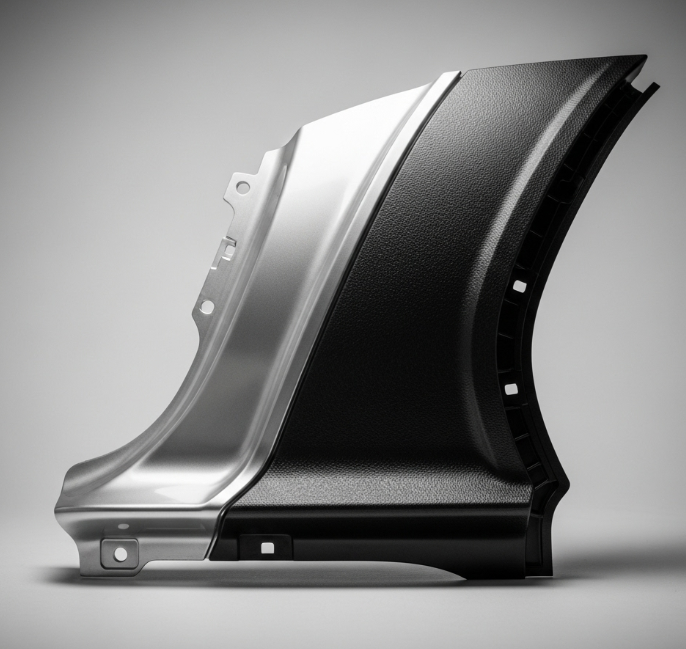
Not every component can—or should—be made entirely from plastic. In some cases, the solution is a hybrid design that uses metal where strength is essential and plastic to benefit from other properties. This approach delivers the best of both worlds: structural integrity, weight reduction, corrosion resistance, and cost efficiency.
Hybrid metal replacement is gaining traction across industries, from heavy machinery to automotive, E&E, and medical devices, as manufacturers seek to optimise performance while meeting sustainability and cost targets.
Hybrid designs are ideal when:
By combining metal and plastic, manufacturers can reduce overall part weights by up to 40%, lower CO₂ emissions through less energy-intensive processing, and simplify assembly by integrating features into moulded plastic parts.
A tractor step is a perfect illustration of hybrid design. Manufacturing such a metal part involves the stamping and bending of several separate, individual components. Assembly lines then weld or bolt all of these together before applying a surface treatment. An extensive process that requires a complex assembly line of different machinery that is energy and labour-intensive.
Switching to a hybrid solution streamlines the manufacturing process significantly, reducing the energy consumption, carbon footprint and overall cost per product.
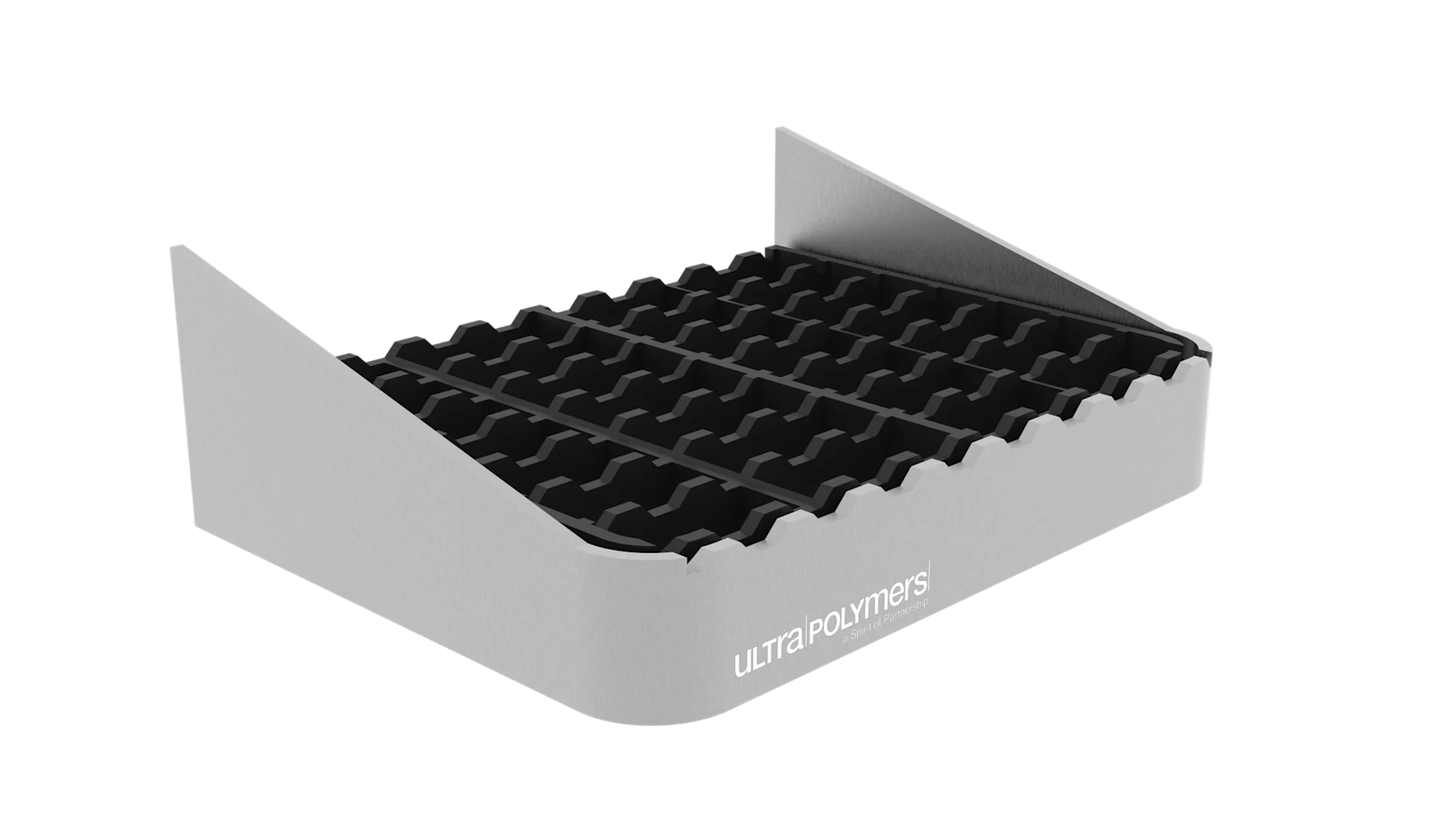
Benefits of this hybrid approach:
Electric motors require a rigid structure for alignment and heat dissipation properties, and so have always been made of metal. Manufacturing requires the production of multiple components with several machining steps. Followed by surface treatment and assembly operations to integrate mounting points and cable guides. All before an assembly line or even the consumer puts the end product together.
This process is time-consuming, energy-intensive, and costly. Switching to a hybrid solution can offer great benefits.
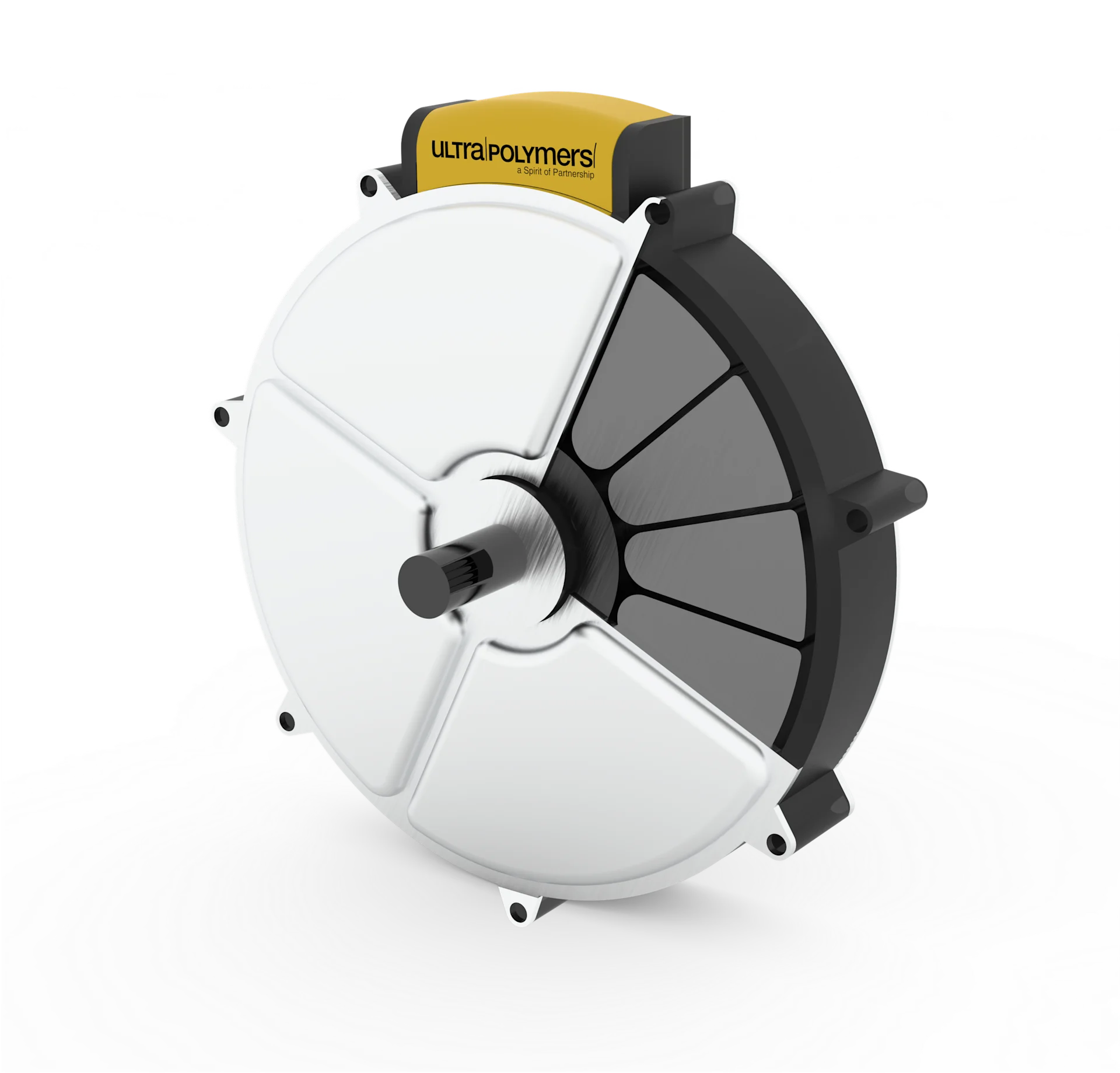
Benefits of this hybrid approach:
Mobility aids such as walkers or crutches have traditionally relied on all-metal construction for strength, but this results in heavy, uncomfortable products. Manufacturing these products is intensive, involving extrusion of metal tubing, cutting, bending, welding, and finishing.
A hybrid approach combines the strength of metal with the ergonomic and hygienic benefits of polymers, creating a product that is lighter, safer, and more user-friendly.
Benefits of this hybrid approach:
When designing hybrid parts, consider:
DOMO’s TECHNYL® MAX range is engineered for hybrid applications with excellent flow properties for complex geometries, optimised chemistry for bonding to metal, and high levels of reinforcement for optimal mechanical properties.
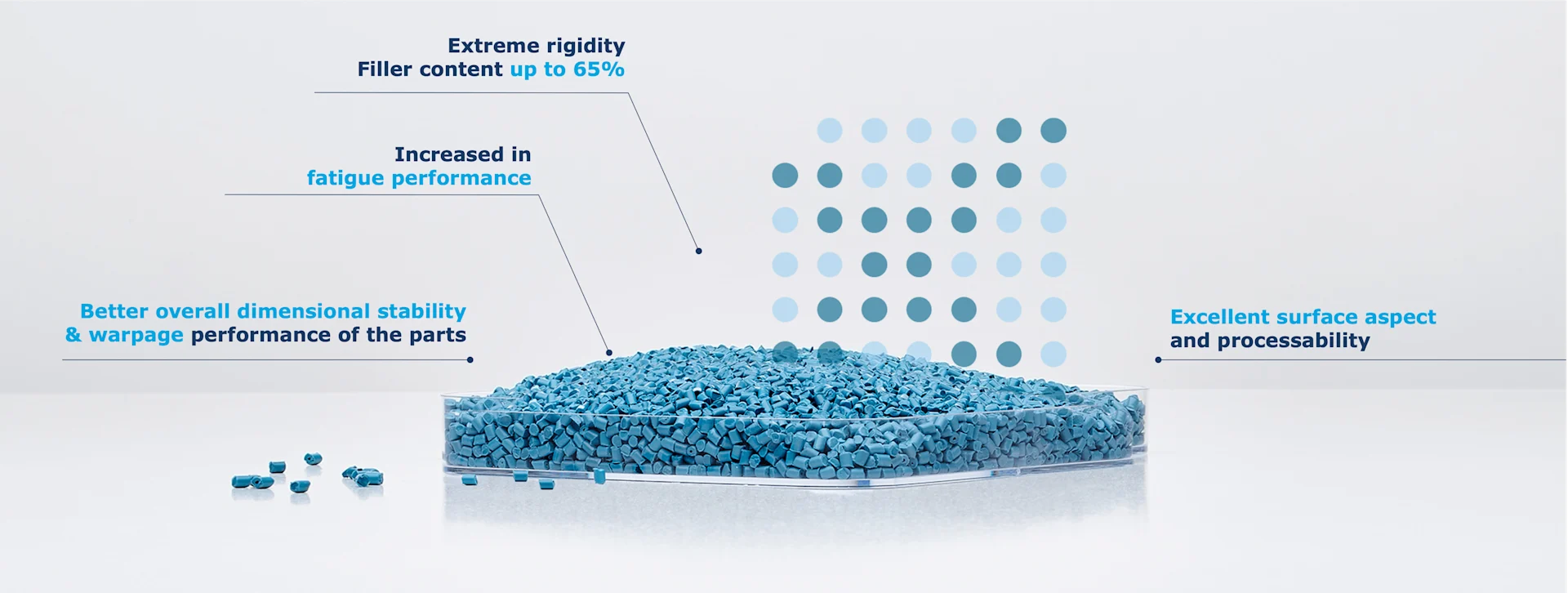
Plastic isn't a drop-in solution for metal; you must optimise the design for manufacture, mechanical performance and functionality. There are many things to consider, but some are:
Optimise your design by working in collaboration with your tool maker, injection moulder, and material supplier. The input from these experts will ensure your product meets your performance standards with a robust manufacturing process.
Hybrid metal replacement is a practical, cost-effective solution for industries where full plastic conversion isn’t feasible. The hybrid strategy brings competitive advantages to your product, including:
By strategically combining materials—metal for strength, plastic for flexibility and weight savings—manufacturers can deliver durable, efficient, and sustainable products without compromise.
DOMO’s TECHNYL® polyamides make this possible, offering the performance, processability, and bonding capability needed for next-generation hybrid designs.
New e-learning course!
The process of replacing metal with polymers isn't as straight forward as it may seem. It requires careful consideration from design to production.
To support you on this journey Ultrapolymers have collaborated with DOMO, producer of TECHNYL® polyamides, with an online course to support you in this process.

c/o Ultrapolymers
Nordic AB Box 5243
SE-402 24 Gothenburg